
Taking a section off the window already in the wall
We do not price a period window from a photograph. Someone comes out, prises off a staff bead, measures the box front to back, and takes a section off the meeting rail, the bottom rail and the glazing bar. That section becomes the specification.
If the moulding is one we hold no cutter for, we have a cutter ground to the shape and run the new stock through it. An ovolo, a lamb's tongue and a plain chamfer all throw a different shadow line, and from the far pavement that shadow is most of what the eye reads. It matters here more than in a lot of towns, because the Victorian villa belt out along Chatsworth Road and Queen's Park is still largely intact, so a frame that is close but not right sits next to the evidence.
What goes into a replacement box sash
A box sash is an assembly rather than a panel. Pulley stiles with pockets cut into them, cast weights sized to each finished glazed sash, braided cords running over brass axle pulleys, a parting bead separating the two sashes and a staff bead holding the lower one against the frame. Horns on the upper sash do a job as well as look right, since they reinforce the joint at the meeting rail.
We balance the weights after glazing rather than before, so the window stays put anywhere in its travel instead of creeping down overnight. Ironmongery is matched to whatever survived: fitch catch or Brighton fastener, sash lifts, pulley faces in the same finish rather than a mixed set.
Draught-proofing, and where slim glazing will not go
Brush seals routed into the stiles, the head and the meeting rail take out most of the rattle and most of the draught, and they can go into sashes we make new or into originals worth keeping. Slim double glazed units are a separate question. They need rebate depth and a section heavy enough to carry the extra weight without pushing the counterbalance out of range. On a chunky Victorian sash there is normally room. On fine bars in a multi-pane top light, getting a unit in means fattening the bar until the window stops looking like itself, and we would rather say that at survey than after it is made.
Article 4 here changes from one street to the next
Chesterfield has four Article 4 Directions and they are not versions of one document. The Town Centre one, sealed in 2007, deals with exterior painting and nothing else, so it has no bearing on a frame. The Abercrombie Street direction names thirteen individual addresses and does withdraw alteration of a dwellinghouse, the class a replacement window falls under. At Barrow Hill it is written street by street, with windows and doors withdrawn on Allport Terrace and on Station Road but not on Campbell Drive.
Read that schedule and the building fabric is in it. Allport Terrace is brickwork or unpainted render with front canopies. Station Road is stone with quoins and gable copings. Where a direction names joinery, we work like for like and expect sections, species and finish to form part of the paperwork. Ring Chesterfield Borough Council's conservation officer, get your own address confirmed in writing, and hold that reply before anything is ordered or cut.
Timber, and what appears on the quote
We are a licensed Accoya manufacturer, and for anything facing the weather it is usually what we suggest: modified timber that holds paint, stays dimensionally stable through a wet winter, and carries a fifty year warranty above ground. Hardwood suits a stained finish or a heavy entrance door. Paint-grade softwood is the cheaper start and the shorter repaint cycle, and across ten years that gap is the whole argument.
Whichever it is, the detail goes on the written quote: species, section sizes, glazing type, finish, ironmongery. Nothing left as an allowance to be decided quietly later.
Off our own benches
Everything is made at 43 Bleak Hill Way in Mansfield, roughly thirteen or fourteen miles away on the A617 or round by junction 29 of the M1, call it half an hour. Tez Cudworth started the firm in 2004 and it has been City and Guilds work made in house ever since, then fitted by the same hands that made it.
We make wooden windows and wooden doors for the weather side, plus internal doors, stairs and balustrades, bespoke kitchens and commercial joinery. Ring 01623 530838 and Tina will get a survey booked.
Work from our benches
-
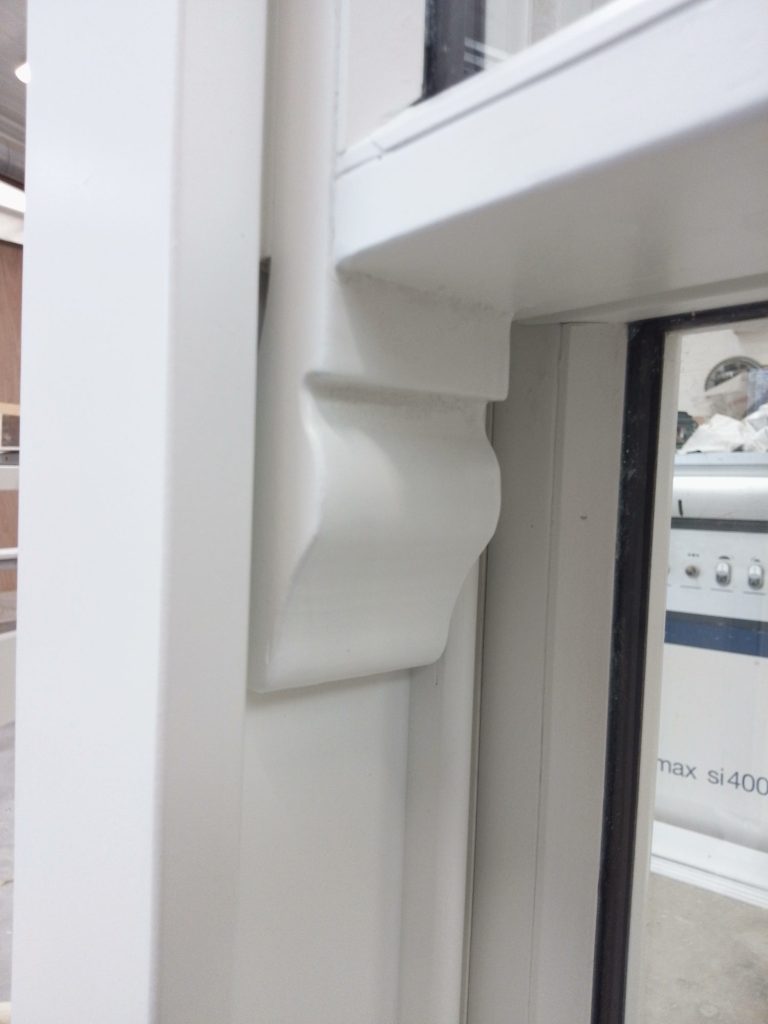
Moulded detail on a painted timber sash window -
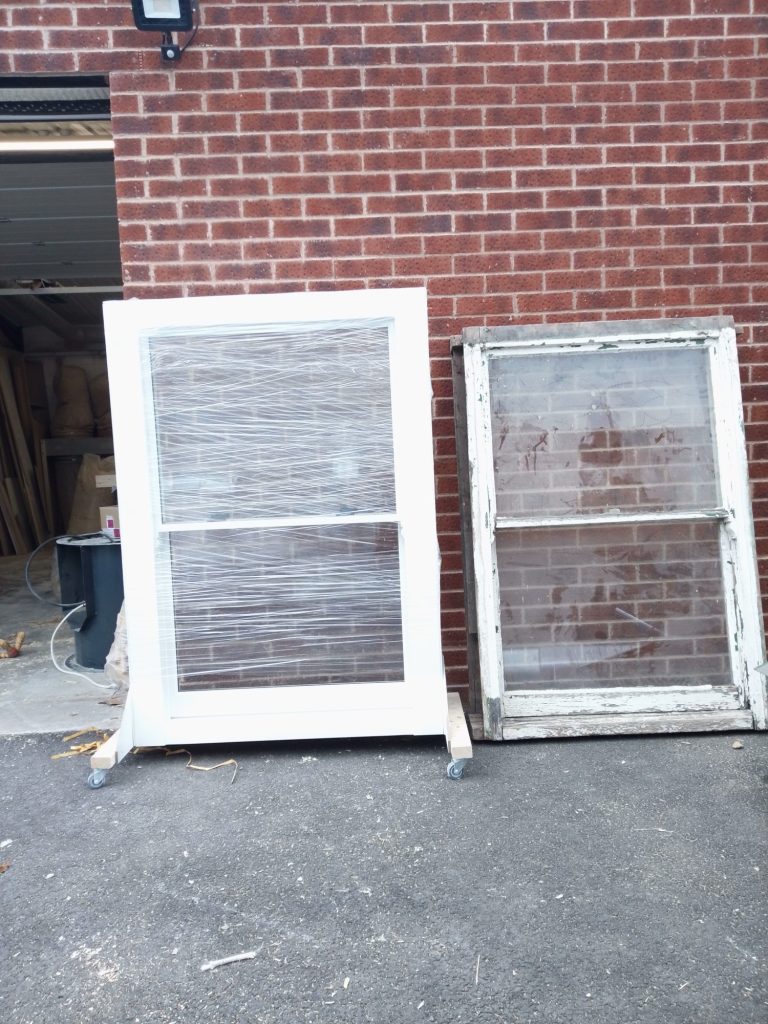
A newly made sash window stood beside the weathered original it replaces -
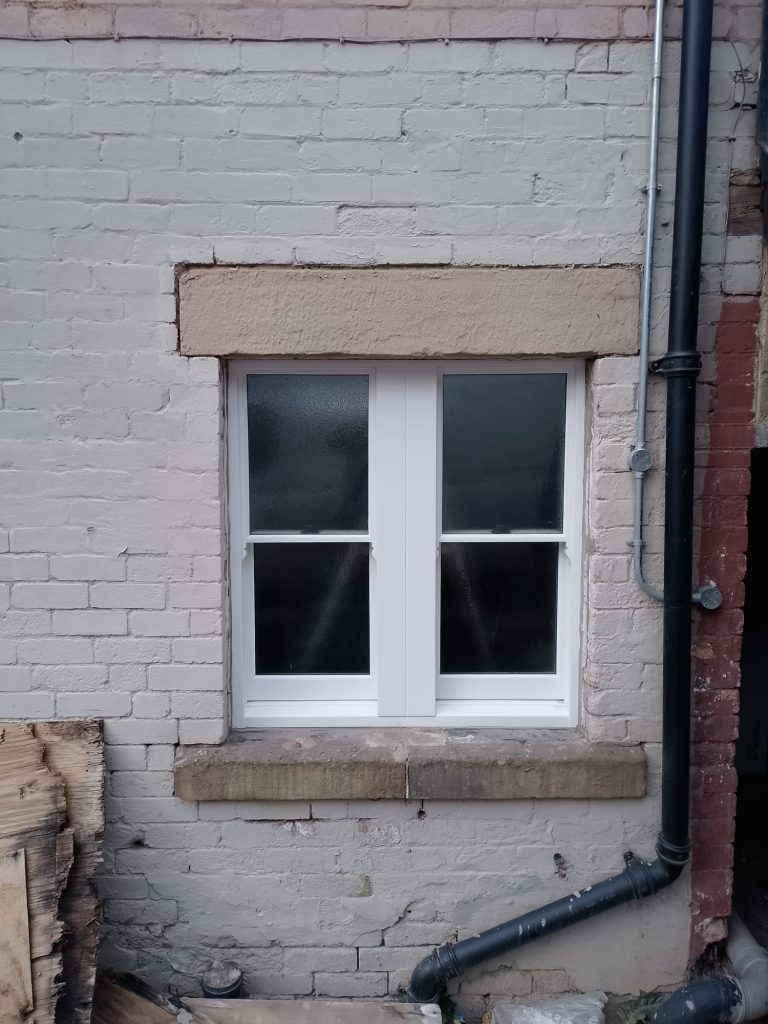
New timber sash windows fitted to a period brick property with stone lintel and cill
What we make
Nearby
We cover the whole of this part of Nottinghamshire and north Derbyshire. If you are closer to one of these, the same team does the work.
Get a quote
Ring 01623 530838 and tell us what you need, or send over rough sizes and a photo of the opening. We will tell you honestly whether we are the right people for the job.