
Copying a profile instead of approximating it
When a window or a door in an older house has finally gone, the only question that really matters is whether the replacement will read like the thing it replaced. We take a physical section off the old joinery, usually a short offcut of a sash stile or a rotten cill, and set the moulding out full size. A cutter is ground to that shape and new stock is run through our own machines. That is the difference between a genuine copy and a shelf section that is close on the depth and three or four millimetres adrift on every curve.
The older stock in town, and what it needs
Alfreton grew on coal and its brick terraces went up as the pits expanded, so a great deal of the pre-1900 housing carries vertical sliding sashes, most of them horned. On those, the timber that goes first is the bottom rail and the cill, where standing water sits against end grain. Splicing a new bottom rail into an otherwise sound sash is often better value than remaking the pair, and we will say so rather than quote you for the bigger job.
Housing built after 1900 leans towards casements, and casements fail in a different way. Hinges drop, the stay pin wears oval, and the weatherseal hardens until the window rattles and pulls cold air through. On a replacement casement we rebate the seal into the frame rather than sticking it on afterwards, cut a capillary groove behind the drip on the bottom rail, and drain the rebate out over the cill so water leaves the frame instead of sitting in it. Fasteners and stays get matched to whatever is on the window already where they are worth keeping, or replaced in stainless where they are not.
Timber, and what it does over ten years
Paint-grade softwood is the cheapest honest answer if the joinery is going to be painted and then looked after. Hardwood holds a sharper arris, takes a stain and shrugs off knocks on a front door. Where external work has to be left alone for years at a time, we are a licensed Accoya manufacturer, and Accoya carries a fifty-year above-ground warranty. Being modified timber it barely moves with the weather, which is what keeps a tall sash running freely and stops a wide door binding in a wet August.
Sashes, overlights and arched heads
Alfreton Hall's list entry records eleven similar sashes upstairs and, on the ground floor, panelled doors below a divided overlight flanked by full-height plain sashes. Plain sashes with no glazing bars are the unforgiving ones, because any difference in stile width or meeting rail thickness is obvious from the pavement. That is why the section gets measured rather than guessed. A divided overlight is a piece of work in its own right, and we make the light, its bars and the doorcase as one assembly so the opening reads as a whole.
The stone lock-up on King Street carries a semicircular headed doorcase, and arched heads appear on older frontages near the market place too. A curved head is set out full size on a rod, built up in laminations so it holds its shape, and the door scribed to it. None of that comes in a standard size.
Consent, said once
Amber Valley's Article 4(2) direction removes permitted development rights for replacing windows and doors, and it covers dwellings in the Belper and Milford conservation area. Alfreton, a conservation area since 1971, is not in that direction. That is not a clean bill of health: listed buildings need listed building consent, flats and maisonettes are treated differently, and Amber Valley wants a heritage statement before it will validate a heritage application. Ask the borough council's conservation officer about your own address and get the answer in writing before anything is ordered or cut.
Made in Mansfield, fitted by the people who made it
Terence "Tez" Cudworth started the firm in 2004 and is City & Guilds qualified. The workshop is at 43 Bleak Hill Way, Mansfield NG18 5EZ, eight or nine miles east of Alfreton along the A38. We survey the openings ourselves, measure every one rather than trusting the one next door, and put the full specification on the written quote before you commit. Tina looks after customers from the first call, progress photographs go out over WhatsApp while the work is on the bench, and the joiners who machined it are the ones who come and fit it.
We make bespoke timber windows and timber doors. Staircases, fitted storage and one-off pieces come under bespoke joinery, and shopfronts and pub work under commercial joinery. Call 01623 530838.
Work from our benches
-
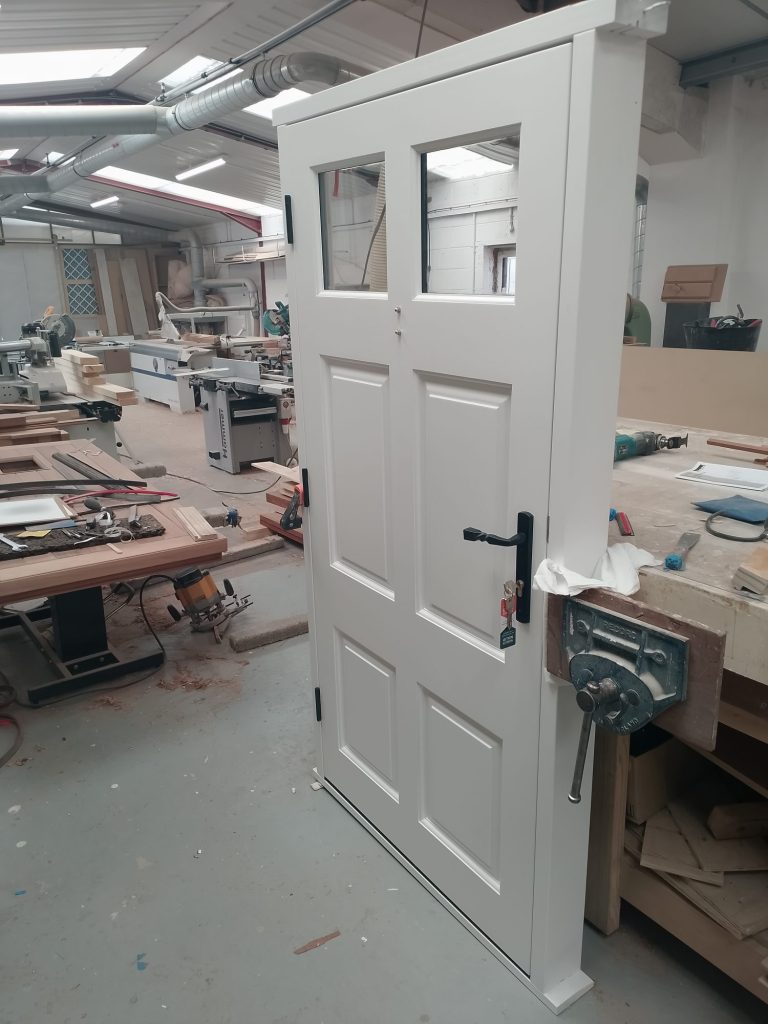
Cream painted cottage door with glazed top panels on the workshop bench -
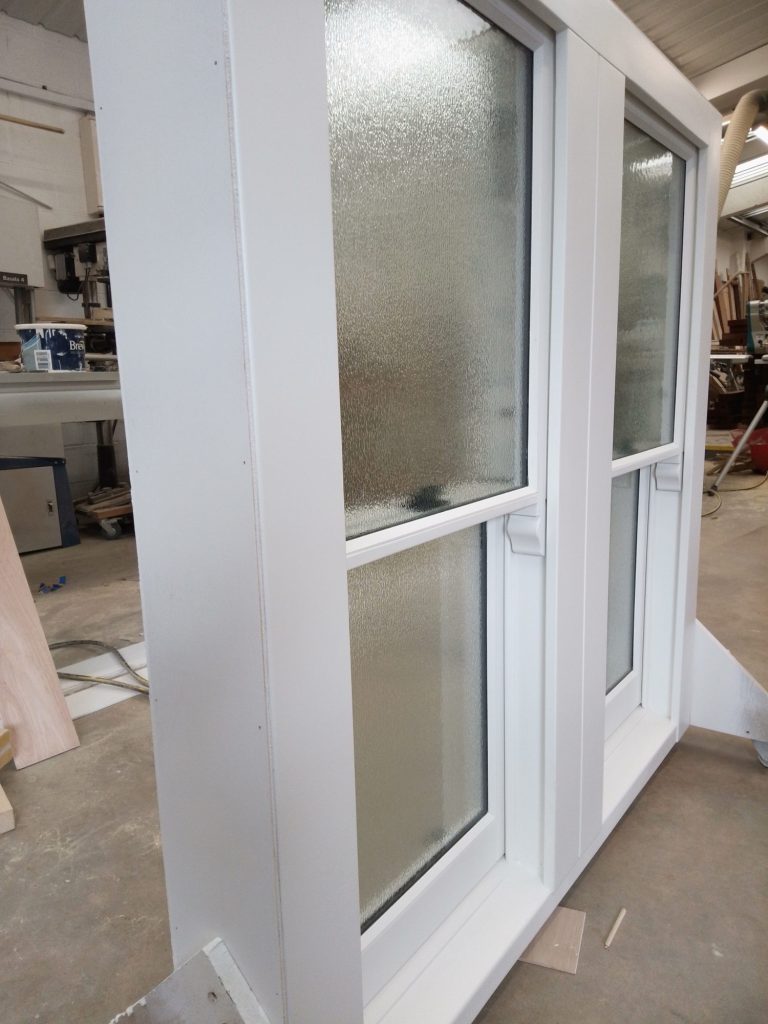
White timber door with an obscure glazed panel and matching side light -
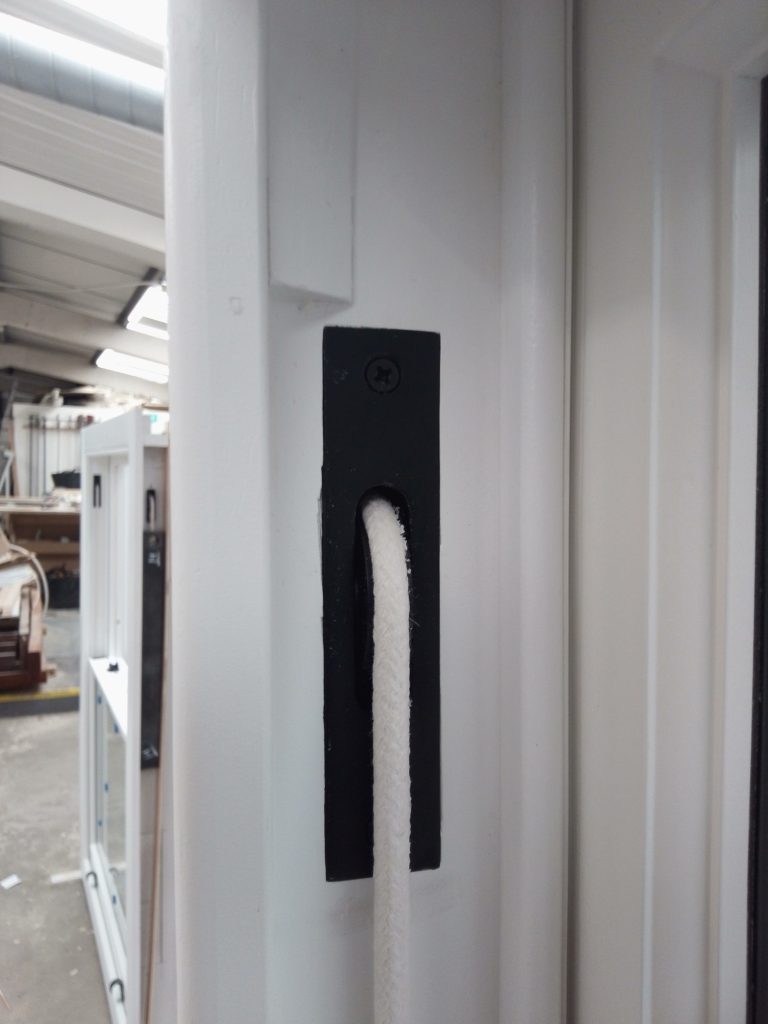
Black lever handle and lock face on a painted timber door
What we make
Nearby
We cover the whole of this part of Nottinghamshire and north Derbyshire. If you are closer to one of these, the same team does the work.
Get a quote
Ring 01623 530838 and tell us what you need, or send over rough sizes and a photo of the opening. We will tell you honestly whether we are the right people for the job.