
Casements fail at the hinge, the stay and the cill
The bulk of what we replace in Worksop is casement work, and casements almost always go in the same three places. Water sits in the bottom corner of the opening light where the joint has opened, so the rot starts there rather than in the middle of the rail. Hinges wear and let the sash drop a couple of millimetres, which is enough for it to catch, and then somebody planes the edge, takes the paint off and lets more water in. And the cill loses its throat, either because it was never deep enough or because forty years of repainting have filled it.
So we make casements to deal with all three. Cills are run with a proper drip groove and enough weathering to throw water clear, drainage slots go where the water actually collects rather than where they look tidy, and the rebate takes a compression seal so the sash pulls up against something. Hinges are specified for the weight of the finished sash and the reach you need for cleaning. Stays are matched to what is already on the house where the pattern still exists, because peg stays and casement fasteners are a large part of what makes 1930s stock look like 1930s stock.
Doors, and the ironmongery that comes off them
Front doors here are usually a four or six panel arrangement with a specific stile width and a specific bolection or ovolo around the panels. We take those dimensions off the door you have before it goes, including the depth of the panel and how far it stands proud, then build the new one as a jointed frame with panels free to move rather than glued solid. That is what stops the panels splitting in the first hot summer.
The existing knocker, letterplate, escutcheon and knob usually come off, get cleaned up and go back on, and where a piece is missing we match the finish rather than putting a shiny modern set on an Edwardian door. Frames, linings and thresholds are made at the same time, because a good door hung in a tired frame is half a job.
The council's own list starts with windows and doors
Bassetlaw District Council sets out what its conservation area Article 4 directions are there to protect, and windows and doors come first, described as the features most vulnerable to change. That is the council's position on the fabric, not our sales pitch. Only two of those directions exist across the whole district and one of them sits around Mr Straw's, the 1905 pair on Blyth Grove that the National Trust keeps as it was found.
Nobody has read that schedule end to end, so even inside the boundary the precise list of withdrawn rights has to be confirmed with the council. Elsewhere in town, a listed building, a flat, or anything that is not a straightforward house brings its own consent requirements regardless. Put the address to the conservation officer, ask for it in writing, and order the timber afterwards.
Timber for a wet elevation
We are a licensed Accoya manufacturer, and on a west facing gable that takes everything the weather has, it is usually worth the difference: a fifty year above ground warranty, and a paint film that lasts because the timber barely moves. Hardwood is the choice where you want a stained finish or a heavier door section. Laminated stock is more stable than solid on long cills and door stiles, and we will say which we are proposing and why. Whatever the specification is, it is written on the quote.
Landlords, shops and the central area direction
The Worksop Central Area also carries a change of use direction removing the right to turn a family house into a small house in multiple occupation. It has nothing to do with windows, but it matters if you are buying to let. For landlords, publicans and shopkeepers we make commercial joinery, from shopfronts to fire rated door sets, and a bespoke bar built to the room.
Seventeen miles down the A60
The workshop has been at Bleak Hill Way in Mansfield since Tez Cudworth started the business in 2004, roughly half an hour south of you on one road most of the way. A survey visit is routine, and the people who machined your job are the ones who fit it and make good round it. Tez is City and Guilds qualified, everything is produced in house, and Tina keeps you posted with WhatsApp photographs at each stage rather than a date and silence.
Phone 01623 530838 with the address and the age of the property for wooden windows or wooden doors. If Bassetlaw needs to see it first, better you hear that from us early than from an enforcement letter later.
Work from our benches
-
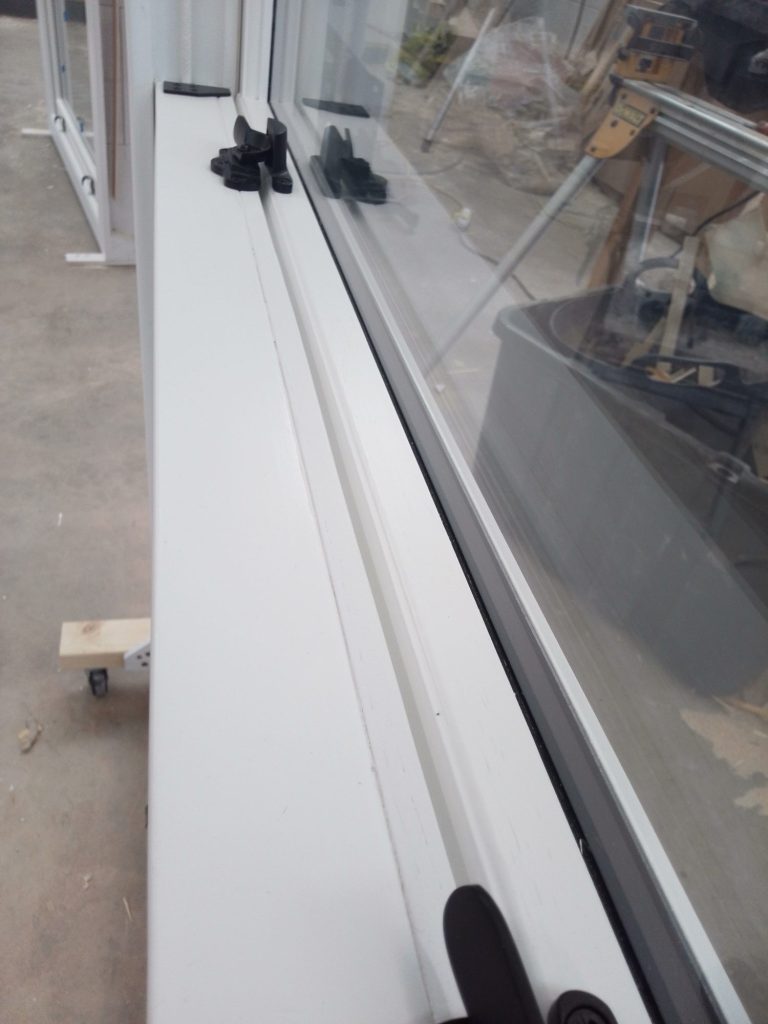
Drainage groove and weatherseal detail on a painted timber cill -
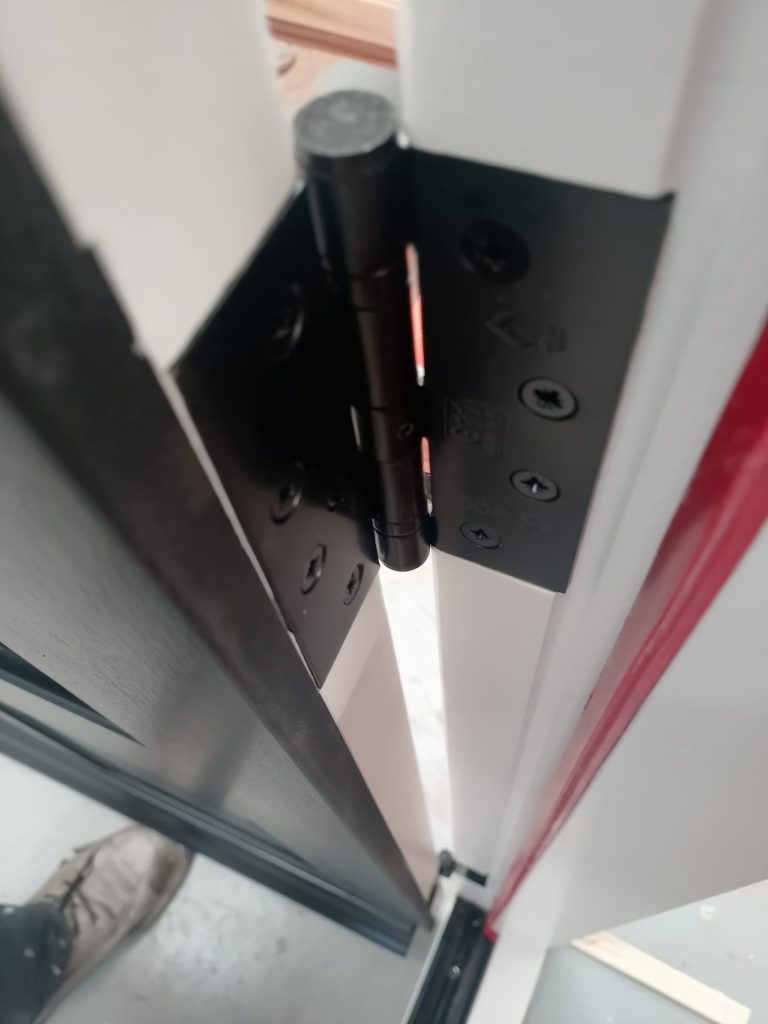
Black butt hinge fitted to a painted timber door -
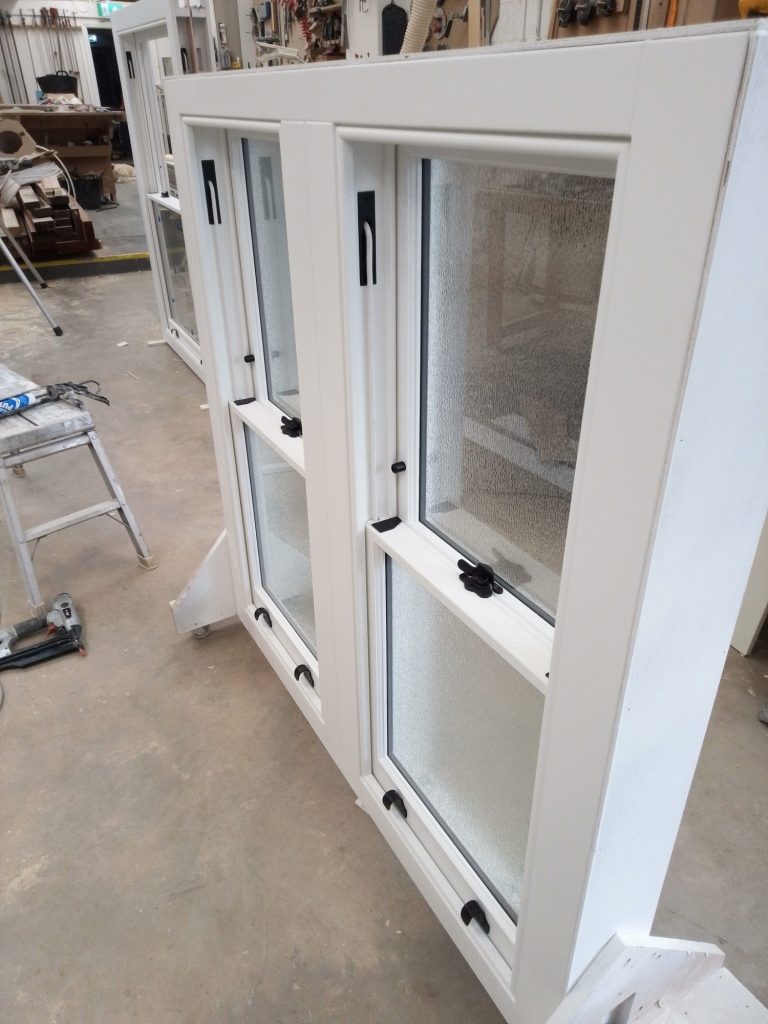
White timber casement window unit with opening lights and obscure glazing
What we make
Nearby
We cover the whole of this part of Nottinghamshire and north Derbyshire. If you are closer to one of these, the same team does the work.
Get a quote
Ring 01623 530838 and tell us what you need, or send over rough sizes and a photo of the opening. We will tell you honestly whether we are the right people for the job.