
Internal doors made for the opening, not the catalogue
The Leen Valley terraces and the interwar semis behind them were built long before standard door sizes existed, and settlement has shifted the openings since. A modern blank that is nominally the right size usually ends up planed down one stile until the panel proportions look wrong, or packed at the head with a strip of softwood. We make the door to the opening you actually have. Where the opening itself has gone out of plumb, a new lining goes in first to case it square, so the door hangs true and the gap around it stays even from top to bottom.
Four-panel Victorian doors are the common pattern in these streets. Copying one properly means getting the panel proportions, the muntin width and the stuck moulding right, with solid stiles and rails and panels left floating in their grooves so seasonal movement does not crack the paint line. Internal doors built that way outlast anything hollow-cored several times over.
Skirting, architrave and mouldings nobody stocks
Half of what makes an old room look right is the run of moulding around it, and most of those sections disappeared from the merchants decades ago. We put a gauge on the existing profile, transfer it to a template and have a cutter ground, so new stock comes off the spindle matching the run in the next room. That counts most when only one wall is being altered and the new work has to vanish into the old.
Deep Victorian skirting is the usual example. A modern 145mm board is simply too shallow, and stacking a small moulding on top of it never convinces anyone. We run the full section in one piece, scribe internal corners rather than mitring them so the joint does not open as the timber moves, and fit the architrave off the lining rather than off the plaster.
Fitted storage in alcoves that are not square
Almost every terrace and semi here has a chimney breast with an alcove to each side, and those two alcoves are never the same width, never plumb, and rarely the same depth top to bottom. Flat-pack cannot cope with that. We measure at three heights and three depths, build the carcass square on the bench where it can be made properly, then scribe the face frame and end panels to the wall on site so the fronts line through and no wedge of daylight runs up the plaster. Fronts are made to suit the room, whether that is plain painted shaker or something matched to joinery already in the house. The same method covers fitted cupboards and cabinets, wardrobes built into a bedroom recess, and bespoke kitchens in rooms no standard carcass size will suit.
Staircases and the rest of the inside
Hall stairs in a narrow terrace are tight, often winding, and frequently carrying a handrail that somebody replaced badly at some point. Newels, strings, spindles and handrail can all be turned and matched, and stairs and balustrades are the job where making the parts ourselves counts for most, because spindle patterns vary house by house and nothing off a rack lines up with what survives. We also build bars, and take on commercial joinery for shops and pubs around the pedestrianised town centre, where access for delivery and fitting has to be arranged rather than assumed.
Consent, briefly
If your property sits in the town centre conservation area, or is listed, or is a flat rather than a house, the position on alteration needs checking rather than assuming. Ashfield District Council's published Article 4 list includes an entry for land off Hucknall Bypass, whose schedule nobody here has seen, so we will not characterise what it does. Ask the council's conservation officer to confirm where you stand, in writing, before an order is placed. Internal joinery in an ordinary house is usually a simpler question, though listed buildings are the exception and internal work is caught there too.
Nine or ten miles up the A611
Everything is made at 43 Bleak Hill Way, Mansfield NG18 5EZ, nine or ten miles north of Hucknall on the A611, a short enough run that a survey visit or a return call to ease a door is no trouble. The firm was set up in 2004 by Terence "Tez" Cudworth, who is City & Guilds qualified, and nothing is bought in and re-badged. Painted work is made in a stable hardwood that holds a crisp edge under a brush; oak and other hardwoods are there where the timber is being left clear. External work is made here as well, from timber windows to handmade doors, and we are a licensed Accoya manufacturer for joinery that has to stand in the weather.
Tina is the one you deal with from the first phone call onwards, the quote comes in writing with the specification set out on it, and we send photographs through WhatsApp as the job progresses. Whoever built it in the workshop is who fits it on the day. Call 01623 530838.
Work from our benches
-
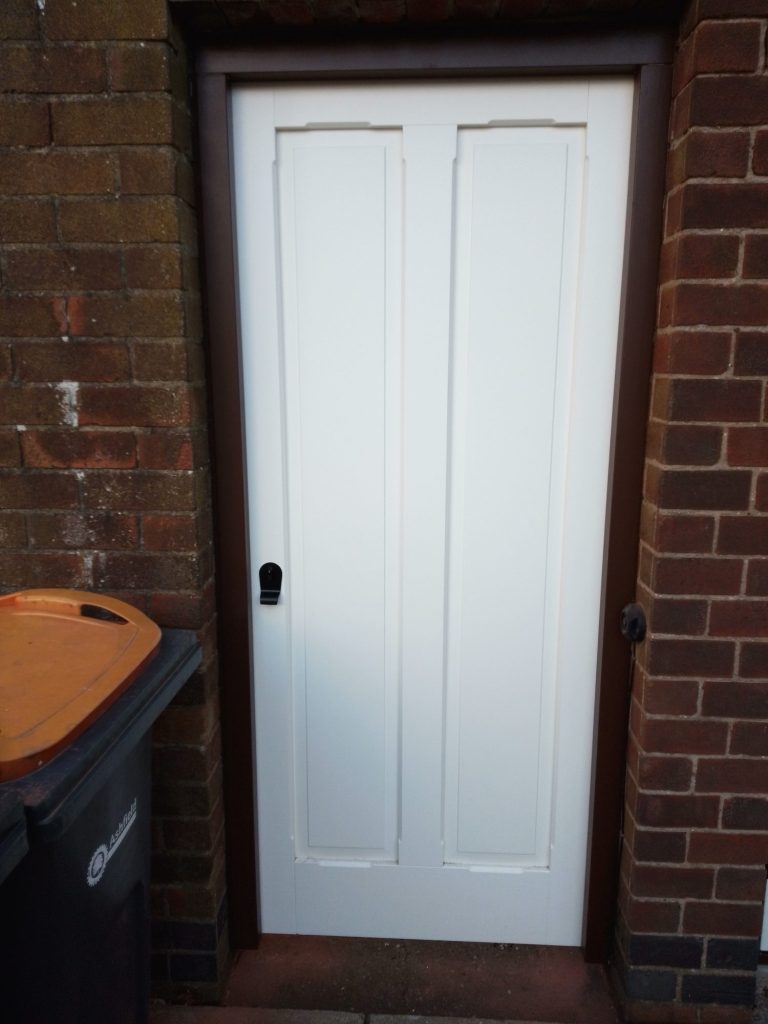
White four-panel internal door fitted into an exposed brick opening -
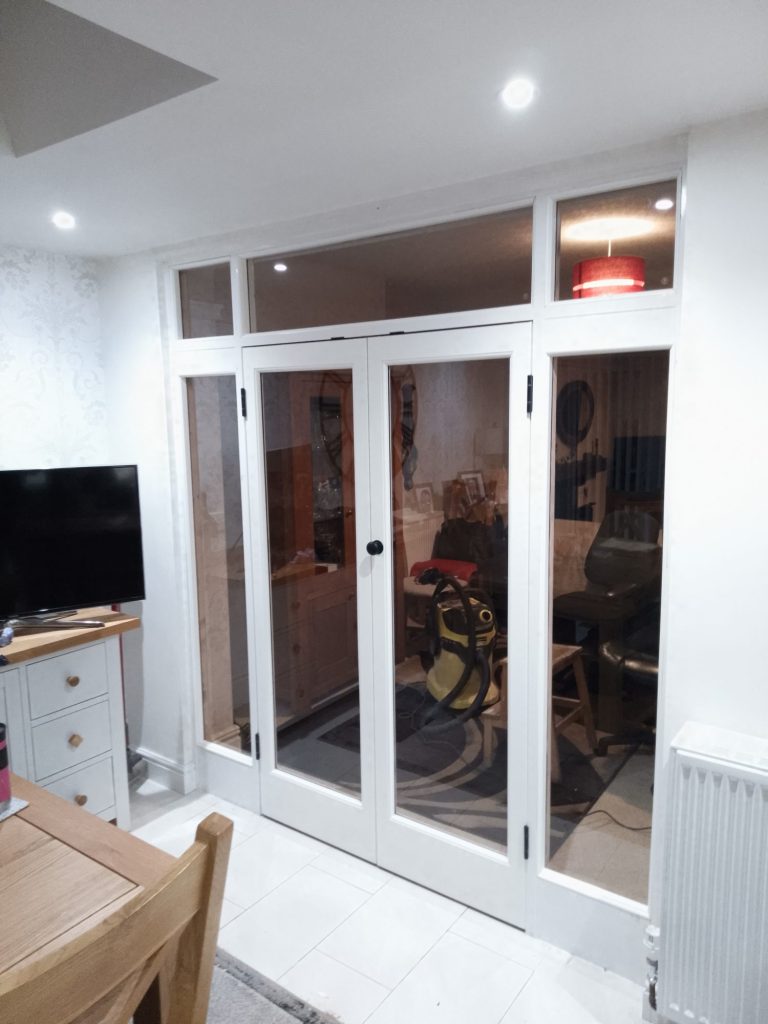
Internal glazed double doors with sidelights and over-panel used as a room divider -
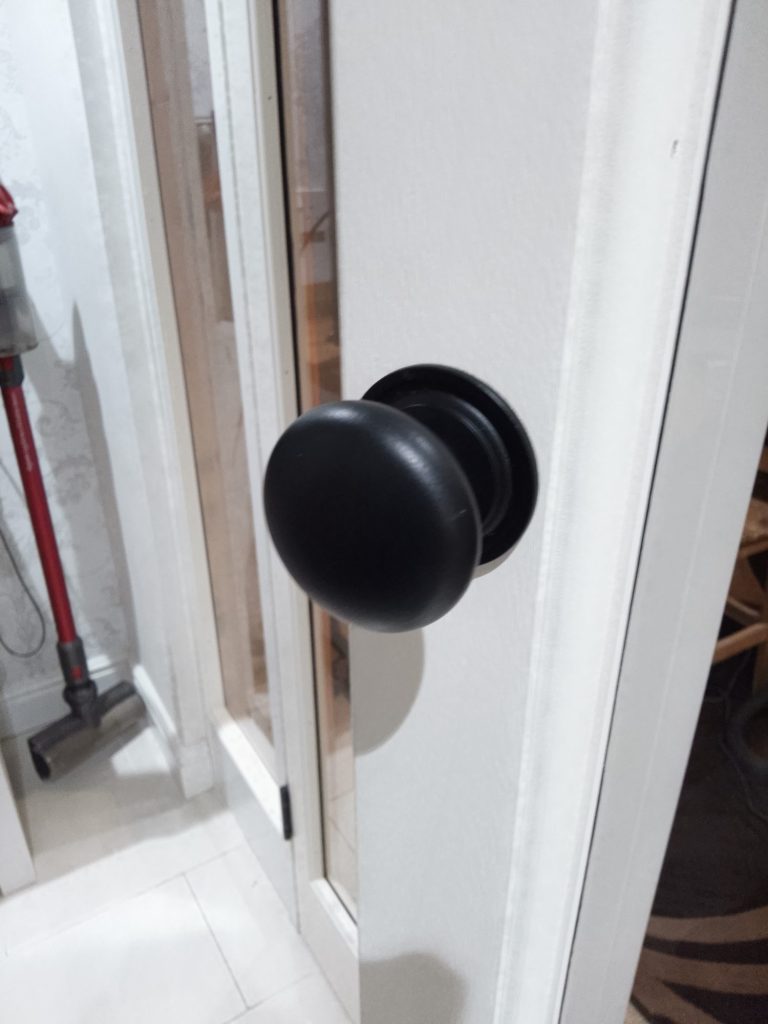
Black door knob fitted to a painted timber door
What we make
Nearby
We cover the whole of this part of Nottinghamshire and north Derbyshire. If you are closer to one of these, the same team does the work.
Get a quote
Ring 01623 530838 and tell us what you need, or send over rough sizes and a photo of the opening. We will tell you honestly whether we are the right people for the job.