
Matching a Georgian sash that has moved for two hundred years
Nearly every job here starts with a profile gauge and a tape. We measure each opening in three places across and three places up, because very few old Newark openings are square, and a frame cut to a single dimension will bind halfway in. Then we take the section: the moulding worked on the glazing bar, the depth of the box, the shape of the staff bead, the throat under the cill.
If that moulding matches a cutter we already hold, we run the stock and move on. If it does not, we have a cutter ground to the drawing and run the new timber on our own spindle moulder until it matches what came out. That is the whole difference between a replacement window and a copy. A stock ovolo dropped into a run of fine astragal bars reads as wrong from the pavement even when nobody can say why.
Cords, weights and the parts you never see
A box sash is a machine, and most of the ones we are called to have failed mechanically rather than rotted. Cords perish and snap, usually on the top sash first because nobody opens it. Pulleys seize under successive coats of paint. Parting beads get torn out by someone forcing a stuck sash and are never properly replaced, so the window rattles for the next forty years.
When we build new boxes we build the whole mechanism. Pulley stiles, pockets you can actually retrieve a weight through, weights balanced against the finished sash including its glass and its ironmongery, waxed cord, and pulleys chosen to sit with the ironmongery already on that elevation. Where new glass makes a sash heavier than the one it replaces, the weights change to suit rather than being left to fight it. Horns are copied from what is in front of us: Georgian sashes generally carry none, later ones do, and getting that wrong on a principal frontage is the single most common thing we are asked to put right. Draught-proofing goes into the beads as brush seal, which takes the rattle out without the sash needing a shoulder behind it.
Four streets where the phone call comes before the order
Newark and Sherwood District Council states that a number of 18th and 19th century properties on Balderton Gate, King Street, Parliament Street and Victoria Street have had permitted development rights restricted by Article 4 directions, published address by address rather than as one blanket rule over the town. What those directions actually withdraw has not been confirmed to us, so we will not tell you they catch windows and doors and we will not tell you they do not. If your address is on one of those four streets, ring the conservation officer, give the exact number and ask for the scope in writing. If the building is listed, listed building consent applies as well, and that is the council's decision rather than ours. We make what the consent allows.
What the eras actually put on the bench
The statutory list descriptions across the town record sash windows from several different periods, and timber framing later encased in brick. That second one matters more than it sounds: where a frame sits in a wall that has moved around an older structure, the opening will be out of true and the new frame has to be made to the opening rather than to a catalogue size. Around the Market Place and the principal streets you would expect slender Georgian bars; on the nineteenth century terrace belt, horned sashes; and on Middlebeck and the newer estates, ordinary modern casements where the sensible answer is often a straightforward like-for-like in a better timber.
Timber, and the ten-year view
For external work we are licensed to manufacture in Accoya, which carries a fifty year above ground warranty and holds paint far longer than softwood because it barely moves with moisture. Hardwood suits a stained or oiled finish and heavier door sections. Paint grade softwood is still good joinery when it is detailed properly and maintained, and we will say so rather than talk you upwards. The species and the finish go on the written quote so you can see what you are buying.
From survey to fitting
TC Joinery has been going since 2004, started by Terence Cudworth, known to everyone as Tez, and everything is still cut and assembled at the workshop on Bleak Hill Way in Mansfield. Nothing is bought in and rebadged. Tez is City and Guilds qualified. Tina looks after customers and dates, progress photographs come over WhatsApp as your job moves down the bench, and the people who made it fit it and make good afterwards.
We make wooden windows and wooden doors for the outside, and bespoke kitchens and stairs and balustrades for the inside. Ring 01623 530838 with the street and the age of the house.
Work from our benches
-
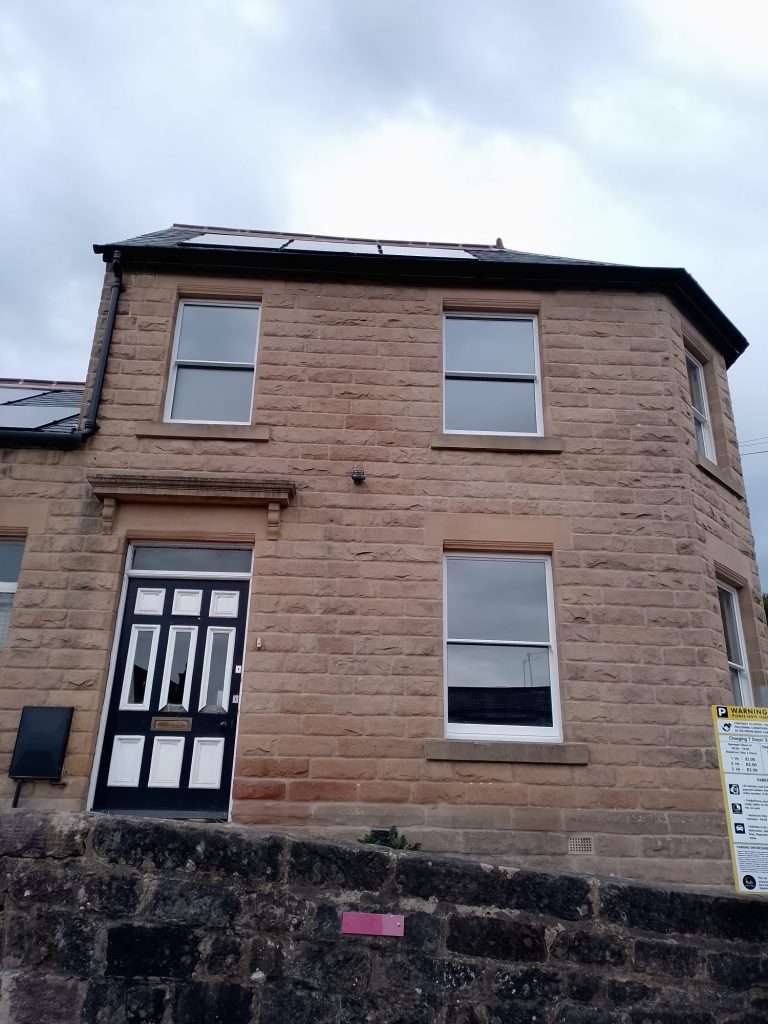
Full elevation of a stone-built period house with new timber sash windows throughout and a panelled front door with fanlight -
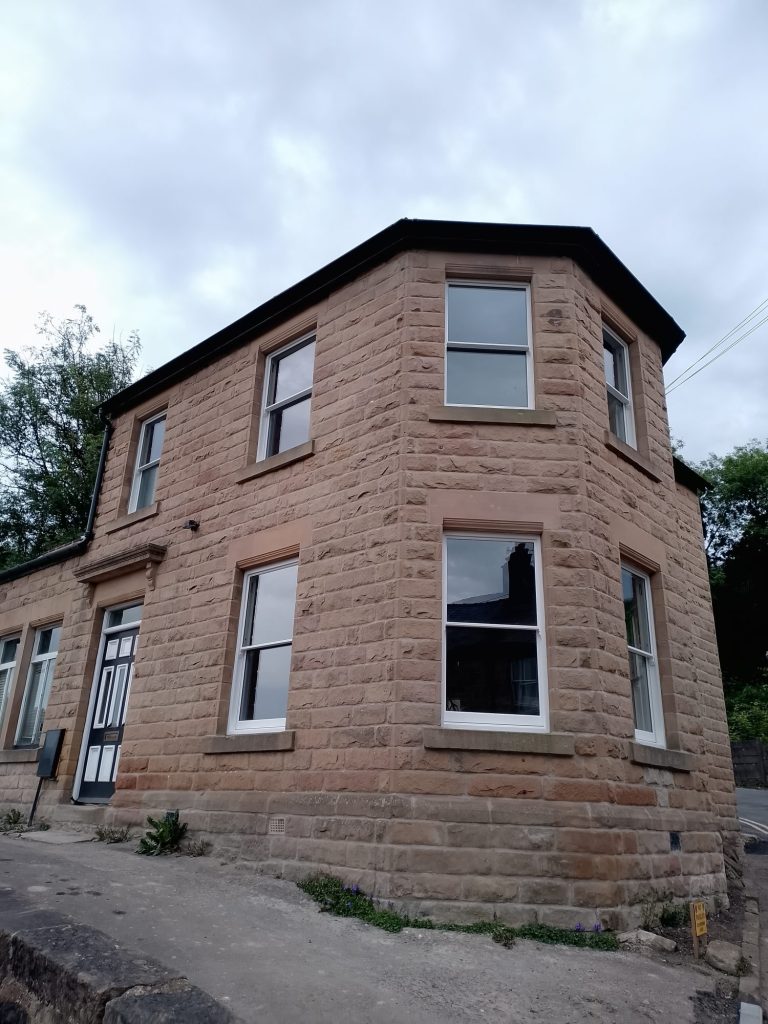
Corner elevation of a stone-built period house with newly fitted timber sash windows -
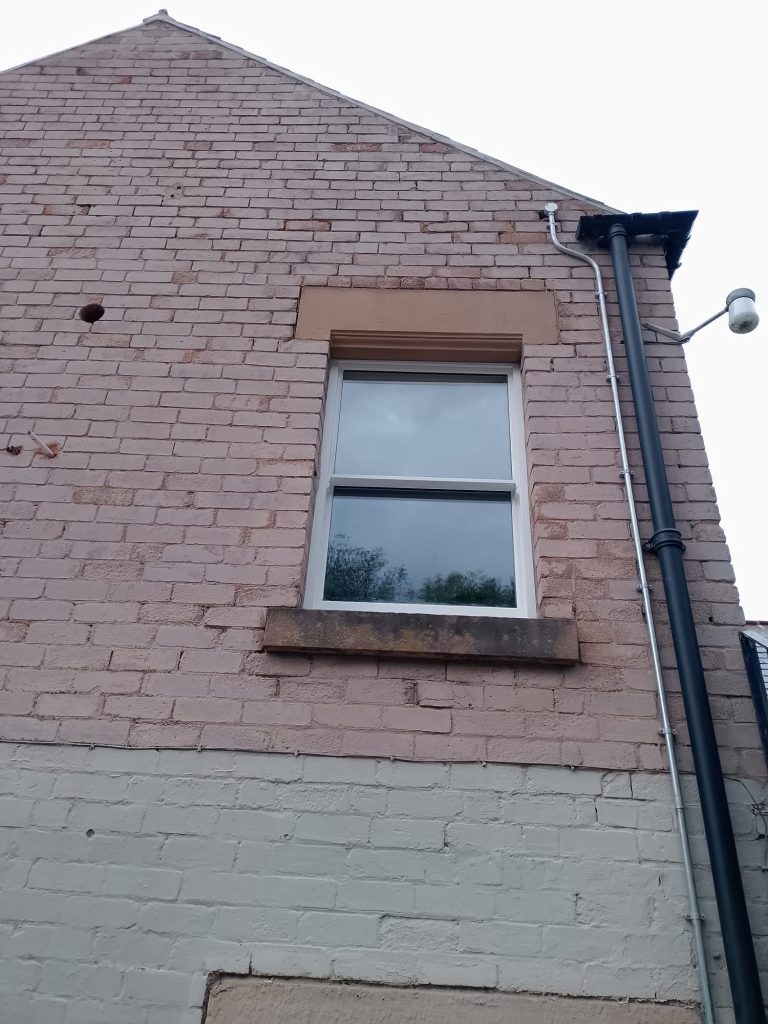
Gable elevation showing replacement timber sash windows
What we make
Nearby
We cover the whole of this part of Nottinghamshire and north Derbyshire. If you are closer to one of these, the same team does the work.
Get a quote
Ring 01623 530838 and tell us what you need, or send over rough sizes and a photo of the opening. We will tell you honestly whether we are the right people for the job.